The State of Bee Health _ “anti-neonic hyperbola”

This a short update of the hyperbola around some the issues being bantered about in the blog-o-shere brought to you by Randy Oliver – respected beekeeper and well respected contributor to the publishing world.

The source is ScientificBeekeeping.com

Beekeeping Through the Eyes of a Biologist
“Neonics in Ontario”

A recent hotbed of anti-neonic activism is Ontario, Canada, in which an unlikely coalition of a few beekeepers and some media-savvy NGO’s is pushing the government to ban these insecticides. Let me state very clearly that I myself support organic and sustainable farming, use of Integrated Pest Management, and greatly reduced use of pesticides. That said, I feel that any pesticide regulations, and agricultural recommendations, should be based upon sound science.

“An exemplar of this philosophy is Dr. Terry Daynard, formerly a professor and Assistant Dean of the Ontario Agricultural College, and currently a farmer himself. Daynard recently received the “2014 Farm & Food Care Champion” award from Farm and Food Care.org, with the introduction that “Daynard is a champion of agriculture in many ways. He is respected as a farmer, scientist, innovator and agricultural advocate, speaking up and advocating sound science even in the presence of criticism by those that don’t agree with him.”

Dr. Daynard applies a sound and scientific assessment of how misinformation can taint well-intentioned environmental regulation in his blog “Critique of “A Proposal for Enhancing Pollinator Health.””

We all want to minimize agriculture’s negative effects on the environment. This includes greatly reducing our reliance upon pesticides. But such reduction needs to evolve as we learn (or re learn) alternate and more sustainable strategies for growing food. This is best done by rational and sober scientific assessment of current and alternative practices. I commend Dr. Daynard pointing this out.

I’m also impressed by a recent blog by Dr. David Zaruk, who is a Risk Governance Analyst at Risk Perception Management and an Assistant Professor Adjunct in Communications at Vesalius College, VUB, and Facultés universitaires St-Louis in Brussels. He blogs under the name of the “Risk Monger.” He recently posted about the real-life agricultural and ecological consequences of the politically- (as opposed to scientifically-) motivated suspension of neonic seed treatments in the EU. http://risk-monger.blogactiv.eu/2014/09/30/the-save-the-bees-ban-failed-crops-and-another-precautionary-fail-who-is-to-blame/

Read previous blogs here:

http://scientificbeekeeping.com/news-and-blogs-page/

Dec 2, 2013 If you have interest in the recent petitions to ban the neonics, I recommend reading a letter to the respected journal Nature by a British bee researcher, Lynn Dicks, in which she points out the problems with hurried setting of policy based upon political pressure rather than upon careful scientific evaluation of the evidence http://www.nature.com/news/bees-lies-and-evidence-based-policy-1.12443

Such a careful evaluation of all evidence is what I’m all about, even if that is unpopular with those who don’t want to be confused by the facts. I currently feel that the problem with planting dust from corn seeding has finally reached the point where the manufacturers either have to take responsibility for compensating beekeepers who suffer losses due to the application of their products, or EPA and PMRA need to restrict the use of neonic seed treatments to only planters that pass dust emission certification. However, I feel that to date there is not enough evidence to call for a complete ban on the neonics–there are simply too many beekeepers successfully keeping healthy hives in areas of seed-treated crops. Clearly this is a hot issue, and the neonics, along with all pesticides need to be closely watched and regulated. It appears to me that our regulatory agencies are doing a good job at this, even if progress seems to be excruciatingly slow.

The most recent blog of interest is on the real people involved in biotechnology (GMO’s). Steve Savage writes:

“As with any new technology, the development and commercialization of biotech crops is a story about people. Its a story about people with ideas and vision; people who did hard and creative work; people who took career or business risks, and people who integrated this new technology into the complex business of farming… Their story is important, but it tends to get lost in much of the conversation about biotech crops.

Many narratives about “GMOs” leave out the people side, presenting it instead as some faceless, monolithic phenomenon devoid of human inspiration, intention and influence. Thats not how it happened. Other narratives about “GMOs” demonize those who made biotech crops a reality. Such portrayals are neither fair or accurate. The real stories of these people matter, because trust in a technology is greatly influenced by what people believe about those behind it.”

Read the rest at:

http://appliedmythology.blogspot.com/2013/10/the-people-side-of-gmo-crops-part-i.html”

SPRING DELIGHT – something sweat and something tart!

Recipe of the Month plus you will really love this years spring honey harvest which will be in selected markets soon.  So do not forget to ask your “foodmonger” for ARDEN HILLS GOLD HONEY …
Rhubarb Strawberry Compote
with Honey and Dates
By Ann M. Evans

Spring is rhubarb and strawberry season and, of course, bee swarming season.  The markets are overflowing with both. The honey adds a fruity rich flavor and sweetness to the rhubarb, without overpowering its innate tart taste. The dates, which technically make this a three-fruit dish, add another layer of sweetness, and create a little surprise of almost caramel-like flesh. When I make this for my mom, she says it reminds her of the way her mother, who came from England, made it. I use my own bees’ honey in this, which in the spring is almost all orange blossom. Wildflower or clover honey would be fine as well.

  • ¾ cup water
  • 2 pounds rhubarb, washed and chopped roughly into 1-inch pieces
  • 1 pint strawberries, washed and stemmed, cut in half
  • 1/2 cup wildflower or other floral raw, unheated honey
  • 10 Medjool dates, pitted and chopped

Bring the water to boil in a medium size non-reactive saucepan with lid over high heat.  When it boils, reduce heat to low and add the rhubarb and strawberries.  Cover. Simmer until rhubarb is tender, about 10 minutes.  Stir with a wooden spoon to break up any clumps of rhubarb. Add the honey and dates. Reduce heat to simmer and cook until almost all the water is absorbed, about another 15 minutes. Stir occasionally to avoid burning.

Serve warm or cold. For desert, serve plain in a glass, footed compote dish, over ice cream or, for breakfast, over oatmeal.

Makes about 8 – ½ cup servings

Where can you find ARDEN HILLS GOLD Honey.

The following locations are “shelving” ARDEN HILLS GOLD HONEY:

Taylor’s Market , Corti Brother’s , Elliot”s Health Foods , Villa Silicia Olive Oils , Thai Basil Restaurant, Edible Pedal, Veggie Trike, and Fulton Green Market.

We also do custom bottling and have comb honey and truly local pollen available.  You can email us at tobeeyoungapiaries@gmail.com for all your local bee products – “sorry no bees”.  Our telephone number is on the label as well – sorry we do not post our #.  Buzzing off to see how the “girls”are doing and prepare to harvest the 2015 crop of honey.

ARDEN HILLS GOLD Honey

ARDEN HILLS GOLD Honey – ToBeeYoungApiaries @ gmail.com.

                                     Raw Honey vs Processed Honey… So is it really honey?

20130626_170140

Raw honey is in its purest form when it is unfiltered or never heated above natural hive temperatures.

Raw honey is a natural source of vitamin B1, B2, B3, B5, B6, and even antioxidant-rich vitamin C. It also contains minerals like magnesium, potassium, calcium, sodium chlorine, sulfur, and phosphate.

So what is the difference between raw honey and the honey that can be purchased at the local supermarket?

Nearly all honey purchased in the market place is heated to some degree, filtered, and/or even pasteurized. Filtering honey with a micron filter will yield honey that has no air bubbles, has no particulate matter in suspension, and will be perfectly clear. The reason for removing large particles, including pollen, is that these can act as “seed crystals” for honey crystallization. Filtering helps prevent crystallization on the store shelf. Honey stored at room temperature will crystallize over time, but the process can be reversed without detriment to the product by warming the honey to approximately 98F degrees.

Filtered honey, must be heated so it becomes less viscous and easier to pump through the filter. Heating honey to temperature above 98.6 has detrimental effects on the nutritional value of honey. Heating honey 100 °F causes loss of nearly 200 components, some of which are antibacterial.and destroys invertase, an important enzyme. At 122 °F, the honey sugars caramelize and it turns from a light color to an increasingly darker color as the temperature rises.

Filtering and processing eliminates many of the beneficial phytonutrients including pollen and enzyme-rich propolis and the pollen that has been denatured by the heating process.

KNOW YOUR LOCAL BEEKEEPER

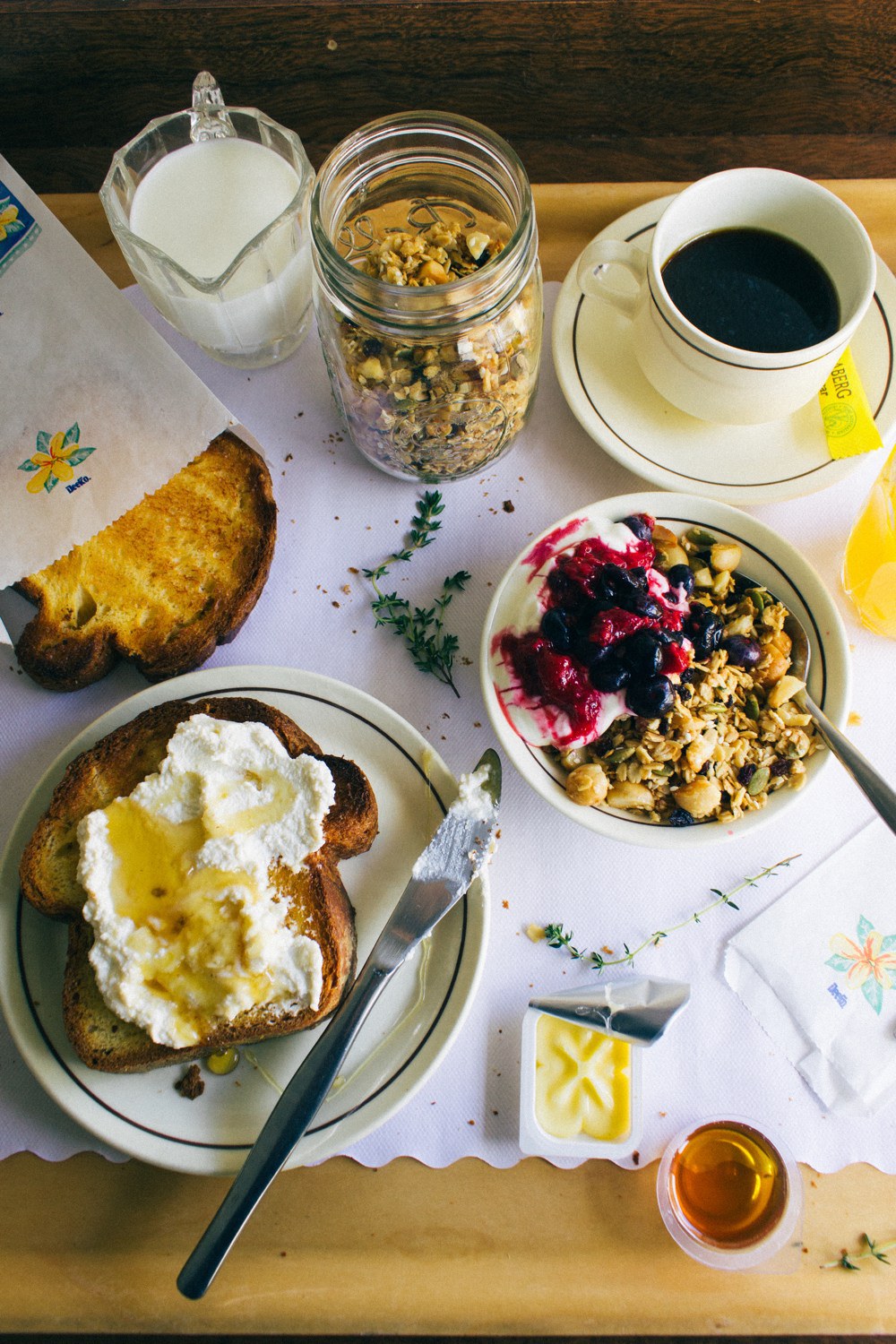
Macadamia, Honey and Thyme Granola

20140923-macadamia-honey-and-thyme-granola-final-7

Makes about 500g

Ingredients

  • 2 cups oats
  • 1 cup macadamias, finely chopped
  • 2 tbs sesame seeds
  • 1/4 cup pepitas [shelled preferred]
  • Pinch salt
  • Leaves of 1-2 small sprigs of fresh thyme
  • 2 tbs coconut oil
  • 4 tbs ARDEN HILLS GOLD Honey
  • 1/4 cup moist, dried currants

Method

Pre-heat oven to 160c/320F.

Mix oats, macadamias, sesame seeds, pepitas, thyme leaves and salt in a large bowl. Melt coconut oil and fold in Arden HILLS GOLD Honey in a small saucepan or in the microwave and stir in dry ingredients.  Be sure not to caramelize the honey.

Spread the mixture on a baking sheet lined with baking paper and bake in oven for 10-15 minutes, until golden. Stir the granola half way through to ensure even toasting.

Remove from the oven and stir in the currants. Leave to cool then store in an airtight container.

Serving suggestion

Serve the granola with Greek yogurt, milk and smashed mixed berries . Accompany with a slice of toasted brioche or a french croissant , slathered with fresh ricotta and drizzled with ARDEN HILLS GOLD Honey. Fresh orange juice and strong coffee on the side.