The ‘BEE”…an Ancient History & Legacy @

“Since at least the times when humans scratched on rocks to create images, the bee and the beehive have played central roles in human spiritual interest and worship. Bees and honey are present in the creation myths, cosmologies and sacred places of many diverse ancient cultures. African, Australian, South American, European, and Hindu-Indian creation myths and sacred stories feature the bee as a symbol of reverence. Archaeological evidence from almost every corner of the world demonstrates this. Bees and the hive life were powerful symbols of community, continuance, regeneration and a connection to the otherworld for our ancestors. As the source of honey, they also represented sweetness, healing and magic.

Many scholars believe early cultures of the Mediterranean region worshiped a mother goddess. These cultures offer us our earliest archaeological evidence of organized apiculture centers. Central religious themes of these regions often depict the bull, the bee and goddess imagery. This triad of themes is believed to have centered around concepts of birth, death and rebirth; the ultimate mysteries of our human lives and those of the natural world around us, regardless of our time in human history. The works of Marija Gimbutas are a rich source for these interpretations.

Minoan culture, of the Neolithic period around Crete, depicted some of it’s many goddess images with bee-like stripes, wings and antennae. Apiculture was a prominent part of the Minoan culture, and bee- hives and other bee images feature prominently in it’s engraved imagery. Later Egyptian, Greek and Roman cultures inherited these patterns and beliefs and transmuted them into their own later myths and legends.

Honey and the bee were also prominent in the cosmology of the early Egyptians. They were principles of the Egyptian diet, medicine and ritual magic. The typical black and gold striping and winged insect imagery seen on many Egyptian god and goddess figures, sarcophagi and other engraved imagery also referenced the bee. The Egyptian Sun God, Ra, cried tears that became bees that then created honey in the world. The Egyptian God, Apis, took the form of a Sacred Bull. The Latin name for our modern day honey-bee is Apis Mellifera. King Menes of Egypt was referred to as ‘The Beekeeper’ and his domain in Lower Egypt was known as the ‘Place of the Bee’. The Great Mother Goddess Neith, was worshiped at Sais and her temple was called ‘The House of the Bee’…cont’d @
[https://www.facebook.com/Merovingians-The-Once-The-Present…/]”
Do genetically modified plants contain animal genes?

Good question.  We have been asked this question many times and have been told in-fanatically by many well meaning folks that GMO’s  in our current food contain animal genes.  Work is being done to produce medical solutions from plants using animal gene makers but mostly for bio-medical benefits The following is a excerpt from a clear explanation  of what is going on with GMO technology in our foods vs the hysteria concerning “Frakin-plants or insects such as”, etc.

The following is a summary of an fact based article which lays out the real science.

“”There have been some experiments involving inserting animal genes into plants, but none of those experiments have resulted in GMOs that are being grown for food anywhere. There is the classic case of an antifreeze gene from fish put into tomatoes to try to increase cold tolerance, but that experiment was never commercialized. Ventria Biosciences has a rice plant which produces human lysozyme, which is an enzyme that destroys certain kinds of bacteria, and is found in tears, saliva, ear wax, etc. They are trying to develop a cheap way to produce lysozyme to prevent diarrhea in developing countries. I’m not sure what the status of their project is, but I know the rice with the human lysozyme gene exists.There is also a genetically engineered carrot culture that produces an enzyme to treat Gaucher’s Disease but it is grown as a culture of cells in a vat, and not as carrot plants.””

“”Moving genes between animals and plants often brings up the “ick” factor with many people, and as a result there were some USDA projects to biofortify maize with iron that were discontinued because they involved animal genes. All life shares a common ancestor, and sometimes genes move between different species, and even between kingdoms in nature. The golden pea aphid is an insect that makes its own Vitamin A thanks to genes it picked up from a fungus. It is very fascinating. It makes you wonder, is the aphid now part fungus? Or is it still just an animal with borrowed genes? Can we consider them to be fungal genes anymore, or are they now aphid genes?””

Now that we are done with the philosophy, back to the science. There are no plants grown for food crops anywhere in the world that we are aware of that have been approved for human food or animal feed that contain genes taken from animals via genetic engineering. Most GMOs on the market use genes from microorganisms or other plants, and in the case of some GMO animals, they contain genes from other (or the same) animals.

Bee virus spread is humanmade, driven by European honeybee populations

Date:
February 4, 2016
Source:
University of Exeter
Summary:
The spread of a disease that is decimating global bee populations is humanmade, and driven by European honeybee populations, new research has concluded.
Share:
FULL STORY

Varroa on pupa.
Credit: Professor Stephen Martin, University of Salford

The spread of a disease that is decimating global bee populations is humanmade, and driven by European honeybee populations, new research has concluded.

A study led by the University of Exeter and UC Berkeley and published in the journal Science found that the European honeybee Apis mellifera is overwhelmingly the source of cases of the Deformed Wing Virus infecting hives worldwide. The finding suggests that the pandemic is humanmade rather than naturally occurring, with human trade and transportation of bees for crop pollination driving the spread.

Although separately they are not major threats to bee populations, when the Varroa mite carries the disease, the combination is deadly, and has wiped out millions of honeybees over recent decades. Varroa feed on bee larvae while the Deformed Wing Virus kills off bees, a devastating double blow to colonies. The situation is adding to fears over the future of global bee populations, with major implications for biodiversity, agricultural biosecurity, global economies, and human health.

The study was funded by the Natural Environment Research Council (NERC) and supported by a Royal Society Dorothy Hodgkin Fellowship. It involved collaborators from the universities of Sheffield, Cambridge, Salford and California, as well as ETH Zurich in Switzerland.

Lead author Dr Lena Wilfert, of the University of Exeter’s Centre for Ecology and Conservation, on the Penryn Campus in Cornwall, said: “This is the first study to conclude that Europe is the backbone of the global spread of the bee killing combination of Deformed Wing Virus and Varroa. This demonstrates that the spread of this combination is largely humanmade — if the spread was naturally occurring, we would expect to see transmission between countries that are close to each other, but we found that, for example, the New Zealand virus population originated in Europe. This significantly strengthens the theory that human transportation of bees is responsible for the spread of this devastating disease. We must now maintain strict limits on the movement of bees, whether they are known to carry Varroa or not. It’s also really important that beekeepers at all levels take steps to control Varroa in their hives, as this viral disease can also affect wild pollinators.”

Researchers analysed sequence data of Deformed Wing Virus samples across the globe from honeybees and Varroa mites, as well as the occurrence of Varroa. They used the information to reconstruct the spread of Deformed Wing Virus and found that the epidemic largely spread from Europe to North America, Australia and New Zealand. They found some two-way movement between Europe and Asia, but none between Asia and Australasia, despite their closer proximity. The team also looked at samples from other species suspected of transmitting the disease, including different species of honeybee, mite and bumblebees, but concluded that the European honeybee was the key transmitter.

Professor Roger Butlin, Professor of Evolutionary Biology at the University of Sheffield, said: “Our study has found that the deformed wing virus is a major threat to honeybee populations across the world and this epidemic has been driven by the trade and movement of honeybee colonies.

“Domesticated honeybee colonies are hugely important for our agriculture systems, but this study shows the risks of moving animals and plants around the world. The consequences can be devastating, both for domestic animals and for wildlife. The risk of introducing viruses or other pathogens is just one of many potential dangers.”

Senior author Professor Mike Boots of Exeter and UC Berkeley concluded: “The key insight of our work is that the global virus pandemic in honeybees is humanmade not natural. It’s therefore within our hands to mitigate this and future disease problems.”

The report, “Deformed wing virus is a recent global epidemic in honeybees driven by Varroa mites,” is published in Science on Friday February 5, by L.Wilfert, G Long, H.C. Leggett, P Schmid-Hempel, R. Butlin, S.J.M Martin and M Boots.

Holiday Sweet Treats

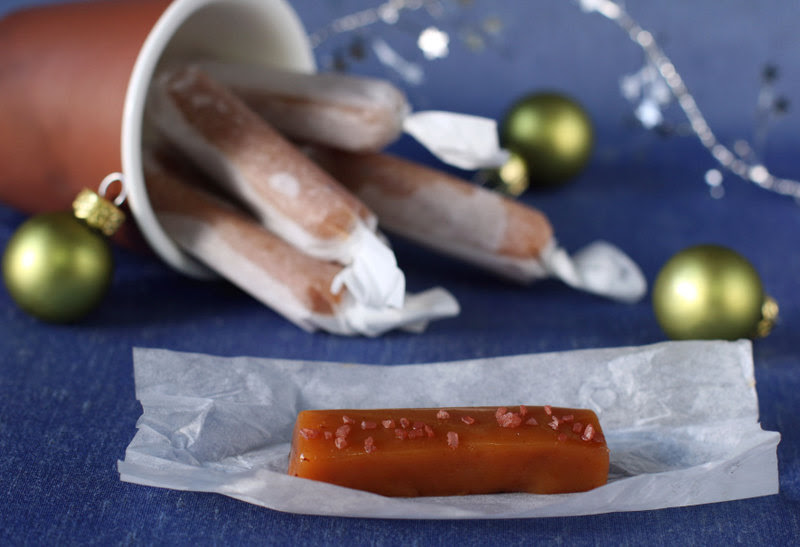
Honey Holiday Caremels
(Recipe adapted from honey.com)

  • 1 cup of butter
  • 2 cups of honey
  • 2 cups of whipping cream
  • 1 cup of brown sugar
  • 1 teaspoon of vanilla extract
  • Choped almonds or sea salt (optional)

Directions:
1. Line 9-inch square pan with plastic wrap.
2. Melt butter over medium-high heat. Add honey, cream and brown sugar; cook until mixture comes to boil, stirring frequently. Reduce heat and continue boiling, stirring frequently, until candy thermometer registers 250°F to 255°F, about 45 minutes.
3. Remove from heat and stir in vanilla; pour into prepared pan.
4. Let cool completely in refrigerator before cutting into individual caramels.
5. Roll in chopped nuts or sprinkle sea salt, and wrap each individually in clear plastic wrap.
6. Store, tightly wrapped in refrigerator up to 1 month. Caramels will be soft at room temperature and firm if kept chilled.

Is it really honey?

Raw Honey vs Processed Honey

Raw honey is honey in its purest filtered or not heated above natural hive temperatures. Raw honey is a natural source of vitamin B1, B2, B3, B5, B6, and even antioxidant-rich vitamin C. It also contains minerals like magnesium, potassium, calcium, sodium chlorine, sulfur, and phosphate.

So what is the difference between raw honey and the honey that can be purchased at the local supermarket?

Nearly all honey purchased in the market place is heated to some degree, filtered, and/or even pasteurized.

Filtered honey, must be heated so it becomes less viscous and easier to pump through the filter.

Heat destroys the natural enzymes, vitamins, and proteins in honey. Filtering and processing eliminates many of the beneficial phytonutrients including pollen and enzyme-rich propolis and the pollen that has been denatured by the heating process.

Scientific proof that micron filtered honey removes pollen was found in a study by the Palynology Research Laboratory at Texas A&M University. In the study, 60 honey products from supermarkets and grocery stores were tested and it was found that 76% contained no trace of pollen. This means that the vast majority of the honeys sold at grocery stores has little micro- nutritional benefits.

Ironically, the USDA encourages honey packers to filter their honey. They even give higher grades to honey that is clear and pollen free. Interestingly enough, despite the USDA encouraging the ultra filtering of honey, the FDA specifies that honey needs to contain pollen to be considered honey… hmm!

The solution is to know your source of the honey and the beekeeper to insure you have honey which is produced with minimum of intervention.

SUPPORT YOUR LOCAL BEEKEEPER.

Neonicotinoid Conference Notes and Presentations Now Available!

Wednesday, September 9, 2015 the California Center for Urban Horticulture hosted a conference on the effects of Neonicotoids with the theme of : Truth or Myth? Neonicotinoids and Their Impact on Pollinators: What is the ScienceBased Research?
The results of the conference can be found on there FBook and host site.  The conference presented a wide range of views and in the end focused on the idea of fact based discussions re neonicotinoids in the broader context of science based research and fact finding not hīˈpərbəlē/ found in many of the discussions we see on the internet and mis-informed media outlets.
 

Neonicotinoid Conference Notes and Presentations Now Available!

Coming soon, photos on our facebook page!

Click on a Topic name to view a summary of that presentation:

Overview of Current Use of Neonicotinoids and the Role of Pollinators in California Agriculture

Dr. Michael Parrella, Professor & Chair – Department of Entomology and Nematology  UC Davis

California Pesticide Regulation of Neonicotinoids

Brian Leahy, Director-CA Department of Pesticide Regulation (DPR)

Neonicotinoid Risks Associated with Invasive Species Management

Nick Condos, Director-CA Dept. of Food and Agriculture, Plant Health Division

Trends in Neonicotinoid Usage in CA Agriculture Invasive Species Control

      Dr. Karen Jetter, Associate Project Economist – UC Agricultural Issues Center

“Past” Neonicotinoid & Pollinator Research and Reference Listing

Margaret “Rei” Scampavia, Doctorial Candidate– Department of Entomology and Nematology , UC Davis

“Current” Neonicotinoid & Bee Research

Dr. Elina Lastro Niño, Extension Apiculturist – Department of Entomology and Nematology, UC Davis

Panel on Neonicotinoid Issues and Concerns

– Nasser Dean, Bayer CropScience
– Aaron Dillion, CA Assoc. of Nurseries and Garden Centers & Four Winds Growers

Watermelon-Lime Coolers

052015-daily-indulgence-headerwatermelon-lime-coolers-ay

Watermelon-Lime Coolers

Ingredients
12 cups seedless watermelon (cubed from a 6-lb. melon)
2 tablespoons honey
1/2 cup fresh lime juice
Watermelon cubes, for garnish, optional
Preparation

1. In a blender, puree watermelon and ARDEN HILLS GOLD honey, in batches, until smooth. Set a fine-mesh sieve over a large bowl and strain, pressing gently to squeeze out juice. Discard pulp.
2. Transfer to a pitcher and stir in lime juice. Garnish each glass with watermelon cubes, if desired.

Fair and Balanced Questions Need to be asked _ the key word is “balanced” …

American Bee Journal Extra

June 5, 2015

Bee Warned – Study Finds Pesticides

Threaten Native Pollinators

CORNELL UNIVERSITY

ITHACA, N.Y. – A new Cornell study of New York state apple orchards finds that pesticides harm wild bees, and fungicides labeled “safe for bees” also indirectly may threaten native pollinators.

The research, published June 3 in Proceedings of the Royal Society B, finds the negative effects of pesticides on wild bees lessens in proportion to the amount of natural areas near orchards.

Thirty-five percent of global food production benefits from insect pollinators, and U.S. farmers have relied almost exclusively on European honey bees.

“Because production of our most nutritious foods, including many fruits, vegetables and even oils, rely on animal pollination, there is an intimate tie between pollinator and human well-being,” said Mia Park, an assistant professor at the University of North Dakota and the paper’s first author, who worked on the study as a Cornell entomology graduate student. Co-authors include professor Bryan Danforth and associate professor John Losey, both in entomology.

The researchers studied 19 New York state apple orchards over two years, 2011 and 2012. They determined the health of bee populations by analyzing the numbers of wild bees and honey bees and the number of species for each orchard. They also created an index of pesticide use from low to high use, then quantified the amount of natural areas that surrounded each orchard.

“We found there is a negative response of the whole bee community to increasing pesticide use,” Park said, adding that fungicides also are contributing to the problem.

The effects of pesticides on wild bees were strongest in the generation that followed pesticide exposure, Park said, possibly suggesting pesticides affect reproduction or offspring. Park said her research only looked at one generation to the next, and more study is needed. The study found no effect of pesticides on honey bees, but European honey bee hives are brought in to an orchard for short periods during blossoming then removed. In addition, growers are careful not to spray while honey bees are in the area. “Honey bees may have shown a response if they were allowed to stay,” Park said.

“Our studies of wild bees in apple orchards are showing how important wild bees are for apple pollination in the eastern U.S.,” said Danforth. With more than 20,000 known bee species, native bees are abundant and diverse in many agricultural habitats, and likely pollinate watermelons, squashes, blueberries and other orchard crops, he said.