
Excerpts from Bee Symposium 2015 : Keeping Bees Healthy
The theme that kept resonating throughout the symposium hosted by the UCD Pollinating Center was there is no single “smoking gun” regarding honey bee health and that nutrition, bee genetics, and GMP’s were the backbone to keeping bees healthy. The is an example of the grounded discussions that took place _ no one was thrown under the proverbial bus that is so commonly found in the general media and blog-o-sphere. The full proceeding can be found online.
“Neonicotinoid Pesticides and Declines in Honey Bee Health; Will a Ban Solve the Issue?” _ a poster session
(This poster is based on the 2014 UC Davis Debate Team topic for the Endangered Species Act 2014 meeting.) Over the past decade, there have been public concerns over large losses in domesticated honey bee populations. These losses could threaten honey production and, more importantly, pollination services for crops such as almonds, stone fruits, and berries. Researchers have worked feverishly to identify the most salient factors contributing to these declines. The introductions of Varroa destructor, Nosema ceranae, and Israeli Acute Paralysis Virus have coincided with the onset of colony collapse disorder (CCD) and are suspected to play a role in these losses. Calls to ban neonicotinoids, a relatively new class of insecticides, overlook the fact that the magnitude of the relationship between pesticides and CCD remains disputed. Numerous studies that implicate neonicotinoids as a cause of CCD are insufficient in rigor and depth. Other classes of pesticides, including those used to control hive pests and fungal diseases, have been found to impact honey bee health and performance. Part of the perceived pollinator crisis stems from the monetization of ecosystem services, as our reliance on the honey bee shifts from demand for honey production to agricultural pollination. However, the reliance on pollinator services does not come from its necessity for overall food stability, but rather for the production of certain specialty crops. In instances where crops require pollination, stable populations of alternative pollinators can compensate for possible honey bee losses. Given the current state of knowledge, we argue that banning neonicotinoids is a premature and disproportionate response to a complex issue.”
“The Honey and Pollination Center mission is to help make UC Davis the world’s leading authority on honey bee health, pollination, and honey quality.stablished in October 2012, the Honey and Pollination Center has continually grown its programmatic initiatives to help establish UC Davis as the world’s leading authority on bee health, pollination and honey quality.
This Bee Symposium is the culmination of a yearlong collaboration with the Department of Entomology and Nematology. The center plans to make the Bee Symposium an annual event, bringing top researchers to UC Davis.
The California Master Beekeeping Program was funded by the College of Agricultural and Environmental Sciences. Course development is underway, guided by UC Davis Cooperative Extension apiculturist Elina Niño. This series of courses will help educate and strengthen the state’s beekeeping population through mentoring and hands-on experience.
Working with the Department of Viticulture and Enology, the center is developing a set of courses to meet the needs of mead makers at all levels, from beginners to commercial mead makers.
The Department of Food Science and Technology is collaborating with the center on honey authenticity research. This interest was enhanced by the publication of the Honey Flavor Wheel in summer 2014. The wheel has been featured at national honey tastings, in magazines and books, and online. The Honey and Pollination Center’s impact will increase as we forge stronger relationships with our university collaborators”
The State of Bee Health _ “anti-neonic hyperbola”
This a short update of the hyperbola around some the issues being bantered about in the blog-o-shere brought to you by Randy Oliver – respected beekeeper and well respected contributor to the publishing world.
The source is ScientificBeekeeping.com
Beekeeping Through the Eyes of a Biologist
“Neonics in Ontario”
A recent hotbed of anti-neonic activism is Ontario, Canada, in which an unlikely coalition of a few beekeepers and some media-savvy NGO’s is pushing the government to ban these insecticides. Let me state very clearly that I myself support organic and sustainable farming, use of Integrated Pest Management, and greatly reduced use of pesticides. That said, I feel that any pesticide regulations, and agricultural recommendations, should be based upon sound science.
“An exemplar of this philosophy is Dr. Terry Daynard, formerly a professor and Assistant Dean of the Ontario Agricultural College, and currently a farmer himself. Daynard recently received the “2014 Farm & Food Care Champion” award from Farm and Food Care.org, with the introduction that “Daynard is a champion of agriculture in many ways. He is respected as a farmer, scientist, innovator and agricultural advocate, speaking up and advocating sound science even in the presence of criticism by those that don’t agree with him.”
Dr. Daynard applies a sound and scientific assessment of how misinformation can taint well-intentioned environmental regulation in his blog “Critique of “A Proposal for Enhancing Pollinator Health.””
We all want to minimize agriculture’s negative effects on the environment. This includes greatly reducing our reliance upon pesticides. But such reduction needs to evolve as we learn (or re learn) alternate and more sustainable strategies for growing food. This is best done by rational and sober scientific assessment of current and alternative practices. I commend Dr. Daynard pointing this out.
I’m also impressed by a recent blog by Dr. David Zaruk, who is a Risk Governance Analyst at Risk Perception Management and an Assistant Professor Adjunct in Communications at Vesalius College, VUB, and Facultés universitaires St-Louis in Brussels. He blogs under the name of the “Risk Monger.” He recently posted about the real-life agricultural and ecological consequences of the politically- (as opposed to scientifically-) motivated suspension of neonic seed treatments in the EU. http://risk-monger.blogactiv.eu/2014/09/30/the-save-the-bees-ban-failed-crops-and-another-precautionary-fail-who-is-to-blame/
Read previous blogs here:
http://scientificbeekeeping.com/news-and-blogs-page/
Dec 2, 2013 If you have interest in the recent petitions to ban the neonics, I recommend reading a letter to the respected journal Nature by a British bee researcher, Lynn Dicks, in which she points out the problems with hurried setting of policy based upon political pressure rather than upon careful scientific evaluation of the evidence http://www.nature.com/news/bees-lies-and-evidence-based-policy-1.12443
Such a careful evaluation of all evidence is what I’m all about, even if that is unpopular with those who don’t want to be confused by the facts. I currently feel that the problem with planting dust from corn seeding has finally reached the point where the manufacturers either have to take responsibility for compensating beekeepers who suffer losses due to the application of their products, or EPA and PMRA need to restrict the use of neonic seed treatments to only planters that pass dust emission certification. However, I feel that to date there is not enough evidence to call for a complete ban on the neonics–there are simply too many beekeepers successfully keeping healthy hives in areas of seed-treated crops. Clearly this is a hot issue, and the neonics, along with all pesticides need to be closely watched and regulated. It appears to me that our regulatory agencies are doing a good job at this, even if progress seems to be excruciatingly slow.
The most recent blog of interest is on the real people involved in biotechnology (GMO’s). Steve Savage writes:
“As with any new technology, the development and commercialization of biotech crops is a story about people. Its a story about people with ideas and vision; people who did hard and creative work; people who took career or business risks, and people who integrated this new technology into the complex business of farming… Their story is important, but it tends to get lost in much of the conversation about biotech crops.
Many narratives about “GMOs” leave out the people side, presenting it instead as some faceless, monolithic phenomenon devoid of human inspiration, intention and influence. Thats not how it happened. Other narratives about “GMOs” demonize those who made biotech crops a reality. Such portrayals are neither fair or accurate. The real stories of these people matter, because trust in a technology is greatly influenced by what people believe about those behind it.”
Read the rest at:
http://appliedmythology.blogspot.com/2013/10/the-people-side-of-gmo-crops-part-i.html”
SPRING DELIGHT – something sweat and something tart!
|
|
Where can you find ARDEN HILLS GOLD Honey.
The following locations are “shelving” ARDEN HILLS GOLD HONEY:
Taylor’s Market , Corti Brother’s , Elliot”s Health Foods , Villa Silicia Olive Oils , Thai Basil Restaurant, Edible Pedal, Veggie Trike, and Fulton Green Market.
We also do custom bottling and have comb honey and truly local pollen available. You can email us at tobeeyoungapiaries@gmail.com for all your local bee products – “sorry no bees”. Our telephone number is on the label as well – sorry we do not post our #. Buzzing off to see how the “girls”are doing and prepare to harvest the 2015 crop of honey.
The Sacramento Bee “FEAST” spotlites ARDEN HILLS GOLD
ToBee Young Apiaries is pleased to see the Sacramento Bee “FEAST” featuring ARDEN HILLS GOLD Honey in their current edition, 1.11.15. As a finalist in the 2015 GOOD FOOD Awards, we are happy to provide a truly urban honey that can stand up to the standards of Slow Food advocates, who see the value of locally produced foods as an important part of our daily dietary needs.
You can find ARDEN HILLS GOLD Honey at Corti Bros, Taylors Market, Villa Sicilia, The Fulton Green Market, Elliots Natural Foods and the West Sacramento VEGGIE TRIKE – a “truly” mobile farmers market .
.
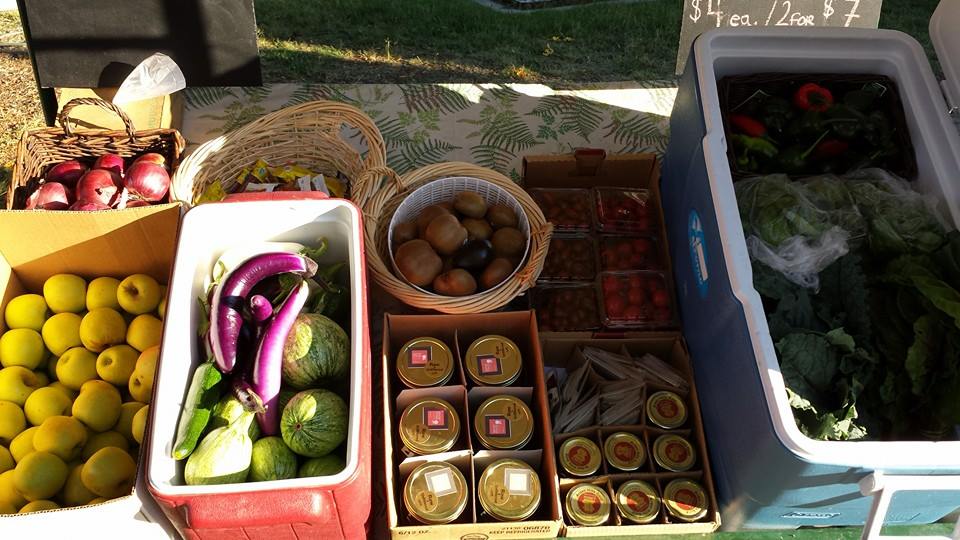
ARDEN HILLS GOLD Honey is also used by Thai Basil Restaurant, The Rind, The PEARL, La Bonne Soupe Cafe, Sugar Mama’s Bakery, and Matteo’s Pizza & Bistro.


We thank everyone for all your support and looking forward “ToBee” your local honey source for 2015.
 If you have any questions you can email us at tobeeyoungapiaries@gmail.com for more information regarding honey and other bee products we provide, including pollen and pure bees wax.
Good Food Merchants Guild
We are thrilled to welcome you to the Good Food Merchants Guild. Since its launch in August, 2012, the Guild has received over 250 applications from over 27 states and we are inspired by what is happening all around the country with Honey via Good Food Merchants Guild.
ARDEN HILLS GOLD Honey
ARDEN HILLS GOLD Honey – ToBeeYoungApiaries @ gmail.com.
Raw Honey vs Processed Honey… So is it really honey?

Raw honey is in its purest form when it is unfiltered or never heated above natural hive temperatures.
Raw honey is a natural source of vitamin B1, B2, B3, B5, B6, and even antioxidant-rich vitamin C. It also contains minerals like magnesium, potassium, calcium, sodium chlorine, sulfur, and phosphate.
So what is the difference between raw honey and the honey that can be purchased at the local supermarket?
Nearly all honey purchased in the market place is heated to some degree, filtered, and/or even pasteurized. Filtering honey with a micron filter will yield honey that has no air bubbles, has no particulate matter in suspension, and will be perfectly clear. The reason for removing large particles, including pollen, is that these can act as “seed crystals” for honey crystallization. Filtering helps prevent crystallization on the store shelf. Honey stored at room temperature will crystallize over time, but the process can be reversed without detriment to the product by warming the honey to approximately 98F degrees.
Filtered honey, must be heated so it becomes less viscous and easier to pump through the filter. Heating honey to temperature above 98.6 has detrimental effects on the nutritional value of honey. Heating honey 100 °F causes loss of nearly 200 components, some of which are antibacterial.and destroys invertase, an important enzyme. At 122 °F, the honey sugars caramelize and it turns from a light color to an increasingly darker color as the temperature rises.
Filtering and processing eliminates many of the beneficial phytonutrients including pollen and enzyme-rich propolis and the pollen that has been denatured by the heating process.
KNOW YOUR LOCAL BEEKEEPER
Macadamia, Honey and Thyme Granola
Makes about 500g
Ingredients
- 2 cups oats
- 1 cup macadamias, finely chopped
- 2 tbs sesame seeds
- 1/4 cup pepitas [shelled preferred]
- Pinch salt
- Leaves of 1-2 small sprigs of fresh thyme
- 2 tbs coconut oil
- 4 tbs ARDEN HILLS GOLD Honey
- 1/4 cup moist, dried currants
Method
Pre-heat oven to 160c/320F.
Mix oats, macadamias, sesame seeds, pepitas, thyme leaves and salt in a large bowl. Melt coconut oil and fold in Arden HILLS GOLD Honey in a small saucepan or in the microwave and stir in dry ingredients. Be sure not to caramelize the honey.
Spread the mixture on a baking sheet lined with baking paper and bake in oven for 10-15 minutes, until golden. Stir the granola half way through to ensure even toasting.
Remove from the oven and stir in the currants. Leave to cool then store in an airtight container.
Serving suggestion
Serve the granola with Greek yogurt, milk and smashed mixed berries . Accompany with a slice of toasted brioche or a french croissant , slathered with fresh ricotta and drizzled with ARDEN HILLS GOLD Honey. Fresh orange juice and strong coffee on the side.
The Ultimate Gift
ARDEN HILLS GOLD Honey
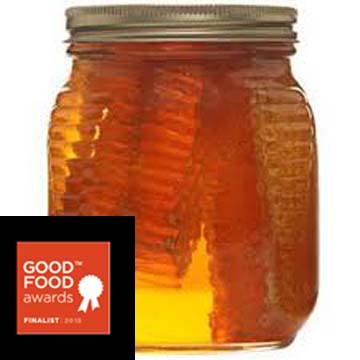
We are offering custom bottling for the Holiday season. You can email us at tobeeyoungapiaries@gmail.com for pricing and availability. Honey makes a wonderful compliment to the traditional hostess gifts. You can pair ARDEN HILLS GOLD honey with your favorite gourmet cheese from the Rind Cheese shop , gourmet bread or crackers, hard fruit, and a libation of your choice to make the ultimate holiday gift. We have 3, 6, and 9 oz Hex jars by the case – 12 per.
.

 2beeyoung